The recent refurbishment of Huis ten Bosch in The Hague has introduced a striking blend of art, science and royal tradition to the palace’s main reception room. Known as the “DNA Salon,” this space now features a bespoke mosaic of 60,000 handmade bricks, each representing a fragment of King Willem-Alexander and Queen Máxima’s genetic code.
Innovative Craftsmanship
Dutch-British artist Jacob van der Beugel spent nearly three years creating the porcelain bricks, then installed them in just a few weeks. The salon’s flat planes and horizontal lines evoke the Dutch countryside—endless fields of tulips rendered in subtle relief.
Protecting Privacy Through Design
To ensure the monarchs’ personal data remained secure, geneticist Hans Clevers reviewed the work, confirming that no medical information was revealed. The result is a purely aesthetic interpretation of DNA, free of sensitive details.
Elements of Dutch Heritage
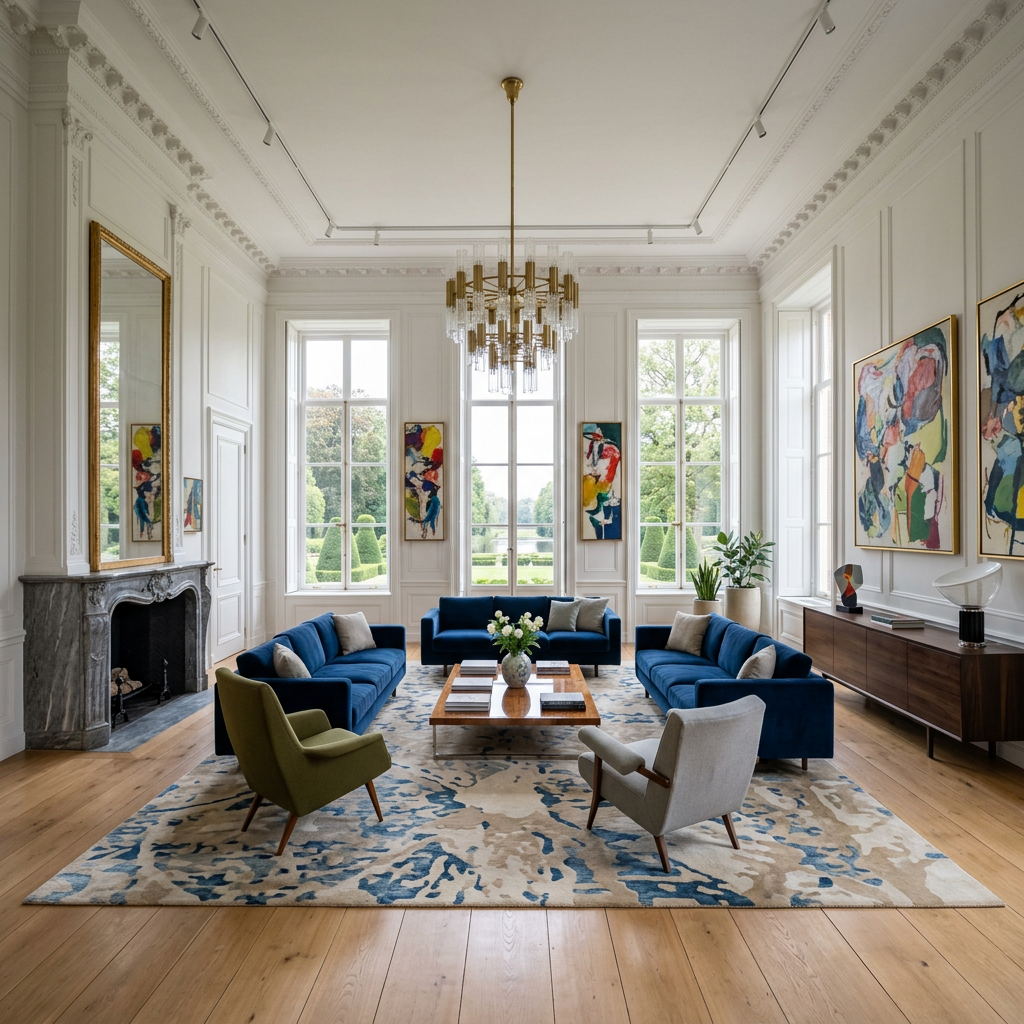
- Colour Palette: Warm gold accents complement a bright cream backdrop, while emerald-green chairs lend the room its alternate nickname, the “Green Salon.”
- Design Lineage: The marriage of tradition and avant-garde is reminiscent of Ootje Oxenaar’s revolutionary banknote designs for the Dutch guilder (1966–1985).
- Architectural Details: A custom chandelier, bespoke furniture and an ornate overdoor frame complete the room’s unique character.
The DNA Salon is more than a conversation piece; it’s a testament to the Netherlands’ capacity to fuse craftsmanship, cultural heritage and scientific insight into a harmonious whole.
For more information, see the NOS report and explore the Rijksvastgoedbedrijf’s photo gallery.